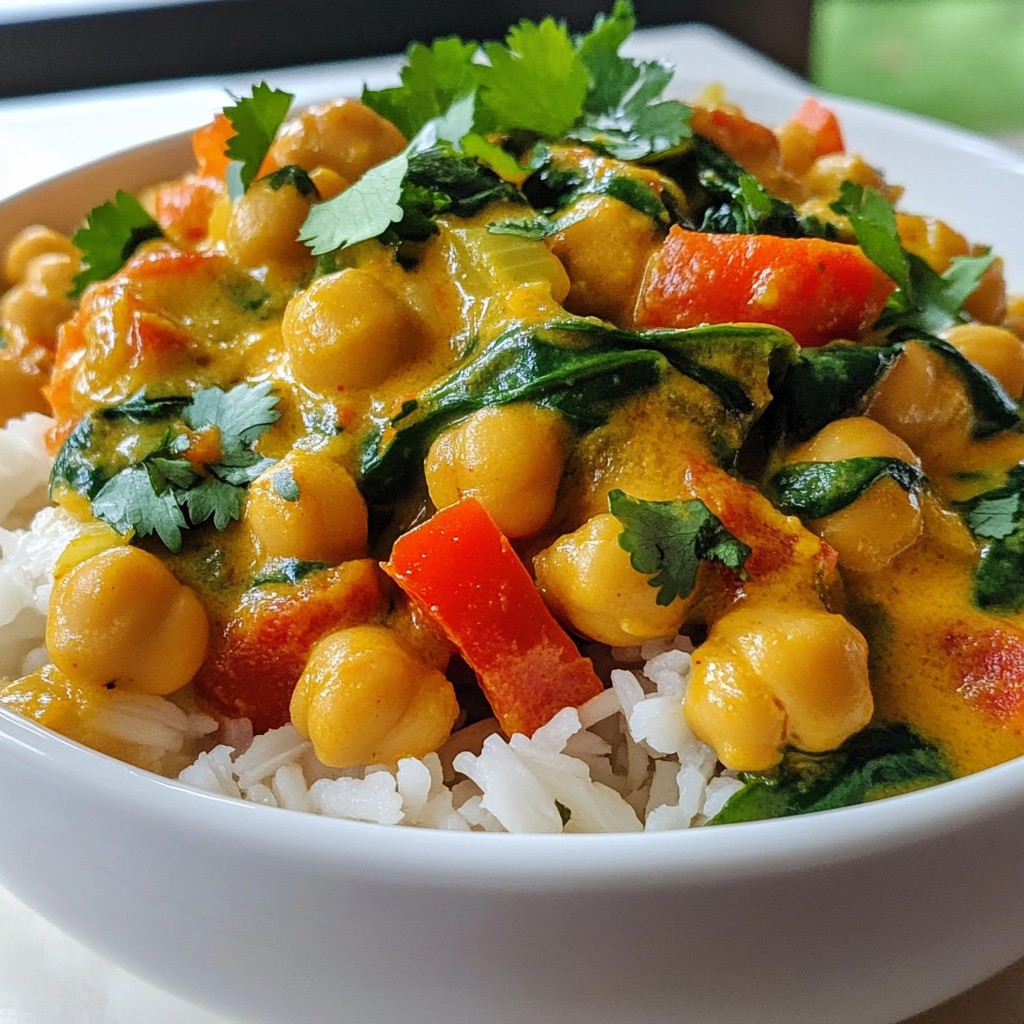
If you're looking for a quick, tasty meal, try my Vegan Coconut Curry Chickpeas! This dish is packed with flavor and nutrients. Using simple ingredients like chickpeas, spinach, and coconut milk, you can create a savory delight that's ready in under 30 minutes. Whether you're vegan or just want a healthy option, this recipe fits the bill. Let's dive into how to make this delicious meal just right!
Why I Love This Recipe
- Flavorful and Aromatic: This recipe combines the warmth of spices like curry, cumin, and turmeric with the creaminess of coconut milk, creating a deliciously flavorful dish.
- Quick and Easy: With a prep time of only 10 minutes and a total cooking time of 30 minutes, this dish is perfect for busy weeknights.
- Nutritious Ingredients: Packed with chickpeas and spinach, this curry is rich in protein, fiber, and vitamins, making it a healthy meal choice.
- Customizable: You can easily modify this recipe by adding your favorite vegetables or adjusting the spice levels to suit your taste.
Ingredients
List of Ingredients
- 1 can (15 oz) chickpeas, drained and rinsed
- 1 can (14 oz) coconut milk
- 1 tablespoon coconut oil
- 1 medium onion, diced
- 3 cloves garlic, minced
- 1 tablespoon fresh ginger, grated
- 1 red bell pepper, diced
- 2 cups spinach, chopped
- 2 tablespoons curry powder
- 1 teaspoon cumin
- 1 teaspoon turmeric
- 1 tablespoon soy sauce (or tamari for gluten-free)
- Salt and pepper to taste
- Fresh cilantro, for garnish
- Cooked rice or quinoa, for serving
To make the best Vegan Coconut Curry Chickpeas, gather these simple ingredients. Each one plays a key role in building flavor. Chickpeas provide protein and a hearty texture. Coconut milk adds creaminess and sweetness.
The coconut oil helps cook the onions, garlic, and ginger, giving depth to your dish. The diced onion brings sweetness, while minced garlic and grated ginger add a zesty kick. Red bell pepper brings color and crunch, and spinach adds a fresh touch.
Curry powder, cumin, and turmeric are essential for that comforting, warm flavor. Soy sauce enhances the savory notes. Finally, salt and pepper balance everything, making the dish taste amazing. Fresh cilantro adds a pop of color and freshness when serving.
Don't forget to serve your curry over cooked rice or quinoa. This meal is not just tasty; it is also quick to prepare and packs a flavorful punch in every bite.
Step-by-Step Instructions
Cooking Process Overview
1. Start by heating 1 tablespoon of coconut oil in a large skillet. Use medium heat.
2. Once hot, add 1 medium onion, diced. Sauté until the onion turns soft and clear, about 5 minutes.
3. Next, stir in 3 cloves of minced garlic and 1 tablespoon of grated fresh ginger. Cook for 1 more minute to release their great aroma.
4. Then, toss in 1 diced red bell pepper. Cook for about 3 to 4 minutes until it softens.
5. Now, sprinkle in 2 tablespoons of curry powder, 1 teaspoon of cumin, and 1 teaspoon of turmeric. Stir well to coat the veggies. Cook for 1 minute to toast the spices.
6. Pour in 1 can (14 oz) of coconut milk. Bring the mixture to a gentle simmer, stirring well.
Final Steps
1. Add 1 can (15 oz) of drained and rinsed chickpeas and 1 tablespoon of soy sauce. Mix well and let it simmer for 10 minutes. Stir occasionally to avoid sticking.
2. After 10 minutes, stir in 2 cups of chopped spinach. Cook for another 2 to 3 minutes, until the spinach wilts down.
3. Season with salt and pepper to taste, adjusting as needed.
4. Serve hot over cooked rice or quinoa, and add fresh cilantro on top for a bright finish.
Tips & Tricks
Perfecting the Texture
To avoid a watery curry, choose the right coconut milk. Use a full-fat version for creaminess. If you find your curry too thin, let it simmer longer. This helps it thicken naturally.
When sautéing vegetables, heat your coconut oil well. Add onions first and cook until they turn soft. This step builds a strong flavor base. Stir often to prevent sticking. Add garlic and ginger after the onions. They need less time to cook.
Flavor Enhancements
For extra flavor, try a splash of lime juice. It brightens the dish and adds zest. You can also mix in more spices like cayenne for heat or garam masala for warmth.
Fresh herbs make great garnishes. Cilantro is perfect for this dish. It adds a fresh taste and bright color. You could also try mint or basil for a twist. These small touches can elevate your curry.
Pro Tips
- Use Fresh Spices: For the best flavor, use fresh spices instead of pre-ground ones. Toasting whole spices briefly before adding them can enhance their aroma and taste.
- Customize Your Veggies: Feel free to add or substitute other vegetables such as zucchini, cauliflower, or peas based on your preference or what you have on hand.
- Adjust the Heat: If you like your curry spicier, add a pinch of cayenne pepper or some chopped chili peppers for an extra kick.
- Let It Sit: For deeper flavors, allow the curry to sit for a few minutes after cooking. The flavors will meld together beautifully as it cools slightly.
Variations
Ingredient Substitutions
You can switch chickpeas for other beans. Black beans or kidney beans work well. They add a different taste and texture. If you want something lighter, try lentils. They cook faster and absorb flavors nicely.
For coconut milk, you have options too. If you're avoiding coconut, use almond milk or soy milk. Just pick a creamier version to keep the dish rich. Cashew cream is another good choice if you want a thick, creamy base.
Spice Level Adjustments
If you like heat, add more spices. Toss in red pepper flakes or a chopped chili pepper. You can also use hot curry powder instead of regular. Start slow and taste as you go.
If you prefer a mild dish, skip the spicy additions. Use less curry powder and add more vegetables. Sweet bell peppers and carrots can add a nice flavor. You can also add a bit of extra coconut milk to tone down the heat.
Storage Info
Refrigeration Tips
To keep your Vegan Coconut Curry Chickpeas fresh, store leftovers in an airtight container. This helps to lock in flavors and moisture. Place the container in the fridge. It’s best to eat the leftovers within 3 to 4 days. If you have a large batch, consider dividing it into smaller containers. This way, you can enjoy single servings.
Freezing Instructions
If you want to save some for later, freezing is a good idea. Use a freezer-safe container or a heavy-duty freezer bag to avoid freezer burn. Leave some space at the top of the container for expansion. This dish can stay tasty for up to 2 months. When you’re ready to enjoy, thaw it in the fridge overnight. Reheat it on the stove over low heat, stirring often. You can also microwave it until hot. Just add a splash of water if it seems dry.
FAQs
Common Questions
Can I make this dish in advance? Yes, you can make this dish ahead of time. Just cook it and let it cool. Store the curry in an airtight container in the fridge. It stays fresh for up to three days. When you're ready to eat, just reheat it on the stove or in the microwave. The flavors will blend even more over time.
Is this recipe gluten-free? Yes, this recipe is gluten-free if you use tamari instead of soy sauce. Both options taste great, but tamari is safe for those with gluten issues. Always check labels to be sure.
How can I increase the protein content? You can add more chickpeas or include other protein sources. Try adding lentils, tofu, or edamame. Using quinoa instead of rice also boosts protein. These options will keep the dish tasty and filling.
This blog post guides you through a tasty chickpea curry recipe. We covered all the ingredients, from chickpeas to spices. Then, we detailed each step to make cooking easy. Don’t forget the tips for texture and flavor! You can adapt the recipe with different beans or spices to suit your taste.
When stored correctly, leftovers can last for days. Enjoy making this dish and feel proud of your cooking skills! It’s simple, healthy, and full of great flavor. Enjoy your curry adventure!