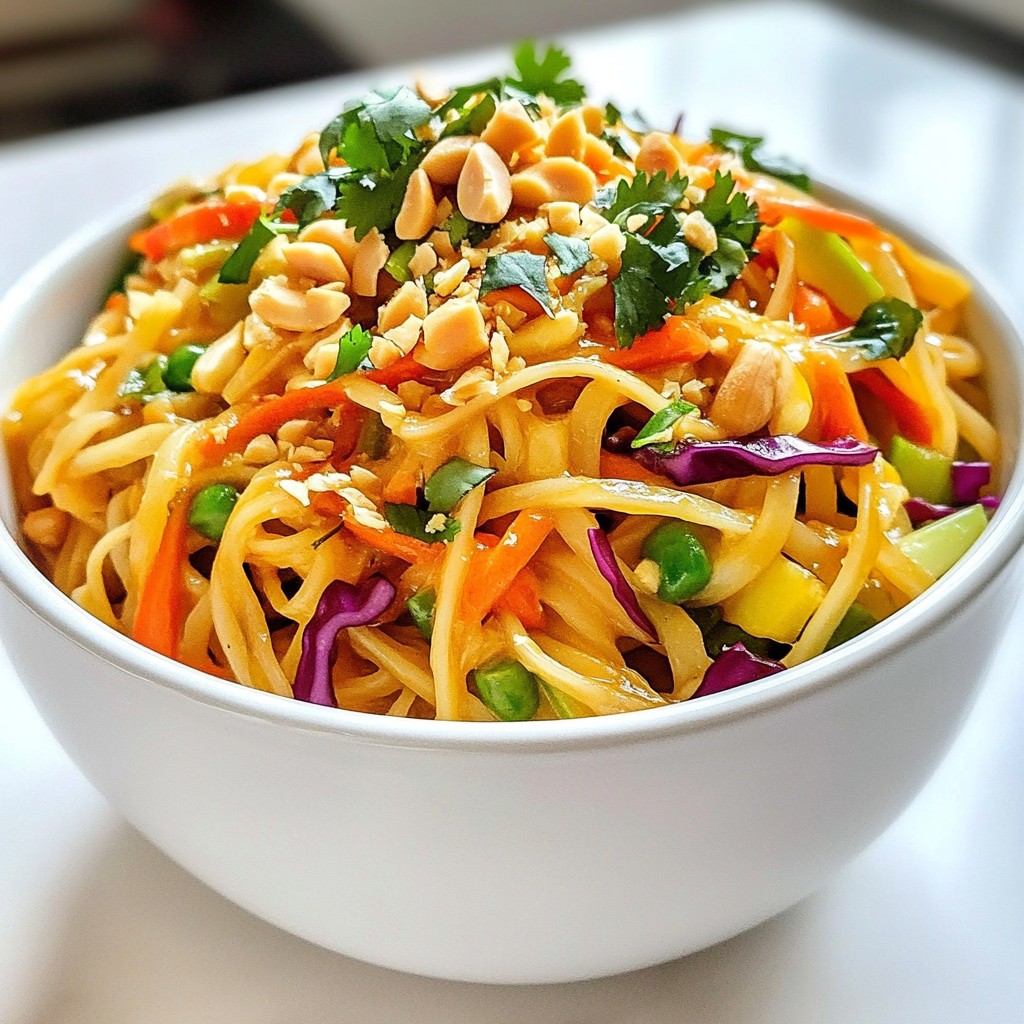
Are you craving a dish packed with flavor and ease? Look no further! My Spicy Thai Peanut Noodles recipe combines simple ingredients like rice noodles, peanut butter, and fresh veggies to create a meal that's both satisfying and quick to make. Whether you're a busy parent or a kitchen newbie, this recipe makes dinner a breeze. Join me as I guide you through each step for a tasty, weeknight favorite!
Why I Love This Recipe
- Quick and Easy: This recipe comes together in just 25 minutes, making it perfect for a weeknight dinner.
- Flavor Explosion: The combination of peanut butter, lime, and sriracha creates a deliciously bold flavor that will tantalize your taste buds.
- Customizable: You can easily adjust the spice level or add your favorite vegetables to suit your personal taste.
- Healthy and Nutritious: Loaded with fresh veggies, this dish is not only tasty but also packed with nutrients.
Ingredients
Main Ingredients for Spicy Thai Peanut Noodles
- 8 oz rice noodles
- 1/4 cup creamy peanut butter
- 2 tablespoons soy sauce
- 2 tablespoons lime juice
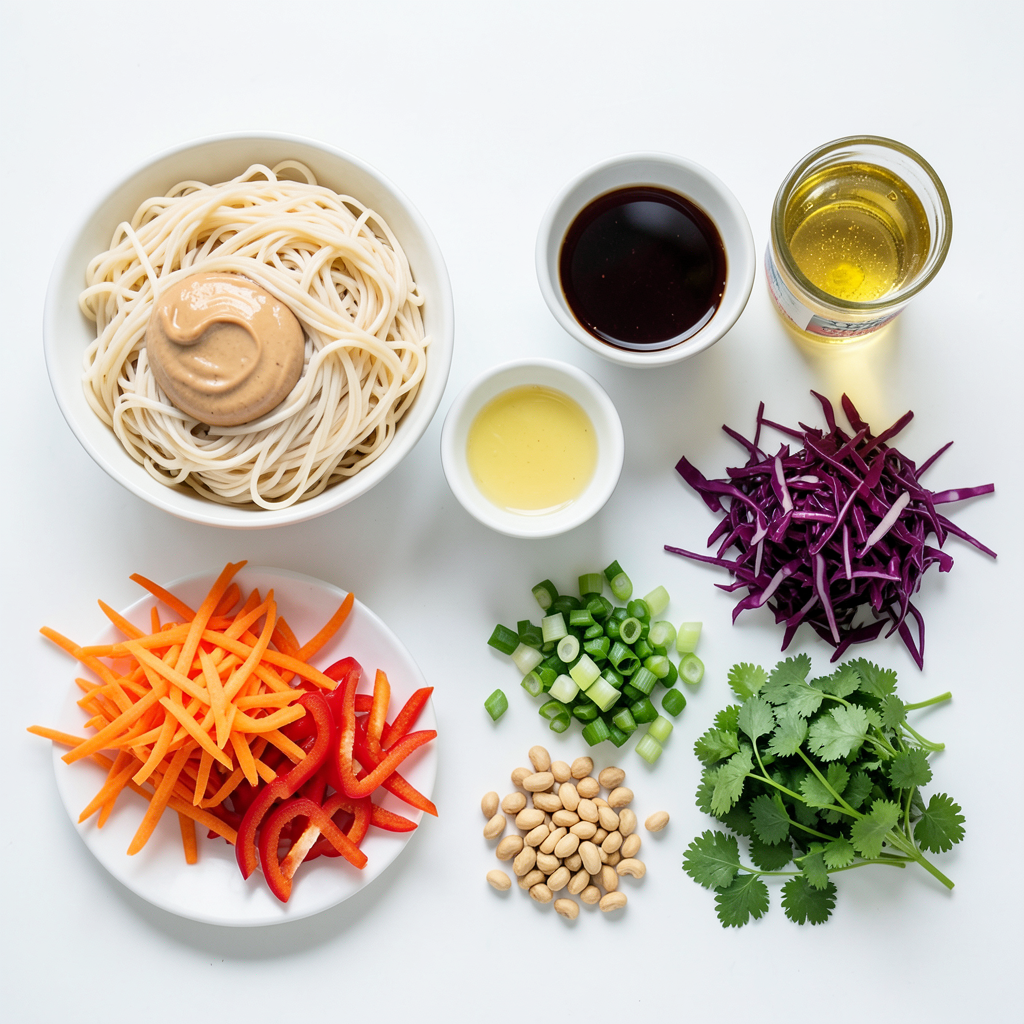
These ingredients are key to creating that rich flavor in your noodles. The rice noodles give a great base. They soak up the sauce and pair well with veggies. Peanut butter adds creaminess and a nutty taste. Soy sauce brings in some saltiness, while lime juice adds a fresh zing.
Fresh Vegetables
- 1 cup shredded carrots
- 1 bell pepper, sliced (any color)
- 1/2 cup red cabbage, shredded
- 1/4 cup chopped green onions
Fresh veggies add crunch and color to your dish. Shredded carrots are sweet and bright. Bell peppers add a nice pop, and you can use any color you like. Red cabbage gives a fun crunch and an extra bite. Green onions finish the dish with a fresh touch.
Optional Garnishes
- Chopped peanuts
- Fresh cilantro
Garnishes make your meal look pretty and add flavor. Chopped peanuts give a nice crunch. Fresh cilantro adds a herbal note. These little extras can really elevate your dish. You can skip them if you want, but they are worth it!
Step-by-Step Instructions
Preparing the Noodles
To start, boil water in a large pot. Once it’s bubbling, add 8 oz of rice noodles. Cook them according to the package instructions until they are al dente. This usually takes about 4 to 5 minutes. After cooking, drain the noodles and rinse them under cold water. This stops the cooking process and keeps them from sticking together.
Creating the Peanut Sauce
In a small bowl, whisk together the following ingredients:
- 1/4 cup creamy peanut butter
- 2 tablespoons soy sauce
- 2 tablespoons lime juice
- 1 tablespoon honey or maple syrup
- 1 tablespoon sriracha
- 1 tablespoon sesame oil
Make sure the mixture is smooth and well combined. If you like it spicier, feel free to add more sriracha! Adjust the sauce to match your taste.
Cooking the Vegetables
In a large skillet, heat a splash of water or oil over medium heat. Add 1 cup of shredded carrots, 1 sliced bell pepper, and 1/2 cup of shredded red cabbage. Sauté these for about 3 to 4 minutes. You want them slightly soft but still crisp. This gives a nice texture to the dish.
Combining and Serving
Now, it's time to mix everything! Add the cooked noodles to the skillet with the sautéed vegetables. Pour the peanut sauce over the mix. Quickly toss everything together to coat the noodles and veggies evenly in the sauce. Heat it all for about one more minute to warm through. Finally, stir in 1/4 cup of chopped green onions for extra flavor. Serve the noodles in bowls and garnish with chopped peanuts and fresh cilantro on top for a colorful finish!
Tips & Tricks
Perfecting the Noodle Texture
- Cooking time tips: Always follow the package instructions for cooking rice noodles. Generally, you want them al dente. This means they should be firm but not hard. Start checking a minute before the time ends.
- Rinsing techniques: After cooking, drain the noodles and rinse them under cold water. This stops the cooking. It also helps keep them from sticking together.
Adjusting Spice Levels
- How to modify sriracha: If you want less heat, use less sriracha. Start with half a tablespoon. Mix it in and taste. You can always add more if needed.
- Suggestions for heat alternatives: If sriracha is too spicy, try chili paste or sweet chili sauce. Both add flavor without too much heat. You can also skip the heat and add a little extra lime juice for zest.
Presentation Suggestions
- Serving styles: Serve the noodles in deep bowls. This keeps everything together and makes it easy to enjoy. You can also make a noodle nest by twirling them with tongs for a fun look.
- Garnishing ideas: Top your noodles with chopped peanuts and fresh cilantro. This adds color and crunch. You can also sprinkle sesame seeds for extra flair.
Pro Tips
- Adjust the Spice Level: Feel free to modify the amount of sriracha based on your heat preference. Start with a small amount and add more gradually for the perfect kick!
- Use Fresh Ingredients: For the best flavor and texture, opt for fresh vegetables. Crunchy bell peppers and vibrant carrots enhance both the taste and presentation of the dish.
- Customize Your Noodles: While rice noodles are traditional, you can substitute with whole wheat or gluten-free noodles to suit dietary needs or preferences.
- Make Ahead: This dish can be prepared in advance. Simply store the noodles and sauce separately, and combine them with the veggies just before serving for optimal freshness.
Variations
Protein Add-Ins
You can add protein to your Spicy Thai Peanut Noodles. Tofu is a great choice for a meatless option. Use firm or extra-firm tofu for the best texture. Simply cube it and sauté it with the veggies. For meat lovers, consider chicken or shrimp. Cook chicken breast pieces or shrimp in the skillet before adding vegetables. This way, the protein soaks up the flavors.
Vegetarian and Vegan Alternatives
To keep this dish vegetarian or vegan, swap honey for maple syrup. This keeps it sweet without using animal products. You can also use coconut aminos instead of soy sauce for a soy-free option. Always check labels if you buy pre-made sauces. Make sure they fit your dietary needs.
Different Noodle Types
Rice noodles are classic here, but you can use other noodles too. Try soba noodles for a nutty flavor. Whole wheat spaghetti is a good substitute if you want something heartier. For gluten-free options, look for rice vermicelli or zucchini noodles. Each noodle brings a new twist to the dish. Choose what fits your taste best!
Storage Info
Storing Leftovers
To keep your Spicy Thai Peanut Noodles fresh, store them in an airtight container. This helps prevent the noodles from drying out. Place them in the fridge right after they cool down. They stay good for about 3 to 4 days.
Reheating Tips
When it's time to eat again, you need to reheat them carefully. To avoid noodle mushiness, add a splash of water before heating. This helps keep them moist. You can use a microwave or stovetop.
- Microwave Method: Place noodles in a bowl. Cover with a damp paper towel. Heat in short bursts, stirring in between.
- Stovetop Method: Warm a pan on low heat, add noodles, and a little water. Stir gently until heated through.
Freezing Instructions
If you have extra noodles, you can freeze them. First, let them cool completely. Then, place them in a freezer-safe bag. Squeeze out as much air as possible before sealing. They last up to 2 months in the freezer.
To thaw, move the noodles to the fridge overnight. If you need them faster, you can use the microwave. Reheat them on low until warm.
FAQs
What can I substitute for peanut butter?
You can use other nut butters like almond, cashew, or hazelnut. These give a unique taste. If you want a nut-free option, sunflower seed butter works well too. It has a similar creamy texture and adds a nice flavor.
Is this recipe gluten-free?
Yes, this recipe can be gluten-free. Look for gluten-free soy sauce, which is often labeled as tamari. This is a great substitute. Also, check the rice noodle package. Most rice noodles are gluten-free, but some may contain wheat, so make sure to read the label.
Can I make this dish ahead of time?
You can make this dish ahead. Cook the noodles and veggies, then store them separately. Keep the peanut sauce in a jar. This way, you keep the flavors fresh. For best storage, use airtight containers in the fridge. Enjoy your meal within three days for the best taste.
This blog post covered everything you need for spicy Thai peanut noodles. We explored the essential ingredients, from rice noodles to fresh veggies. You learned step-by-step instructions, tips for perfect texture, and how to store leftovers. We also discussed possible variations like protein add-ins and gluten-free options.
Embrace your creativity when making this dish. Use the tips to make your meal unique. Simple adjustments can lead to delicious results. Enjoy your cooking adventure!